Japanese tea practice did not begin as a refined aesthetic art. Instead, it formed inside institutions. Court ritual, Buddhist monastic regulation, and Zen discipline gave tea a structured and repeatable form. This article explains how Japanese tea practice developed through these institutional environments and became a transferable cultural system.
At first, tea appeared in limited ceremonial contexts. However, once institutions incorporated tea into regulated space, repetition gave it durability. As a result, Japanese tea practice gained structural stability rather than remaining an occasional custom. The next structural transformation is examined in Ikkyū Sōjun and the Zen Transformation of Tea Practice, where Zen discourse intensifies meaning within established form.
How Japanese Tea Practice Entered Court Ritual
A well-known entry in Nihon Kōki (812) records the monk Eichū preparing and offering tea to Emperor Saga. Although the text does not describe preparation in detail, it demonstrates that tea functioned inside imperial ceremony. Court ritual incorporated tea into formal hierarchy, thereby granting it institutional recognition.
This episode does not create direct continuity with later tea culture. Nevertheless, it shows that tea could operate within ordered authority. In this way, Japanese tea practice began its institutional formation within ceremonial space.
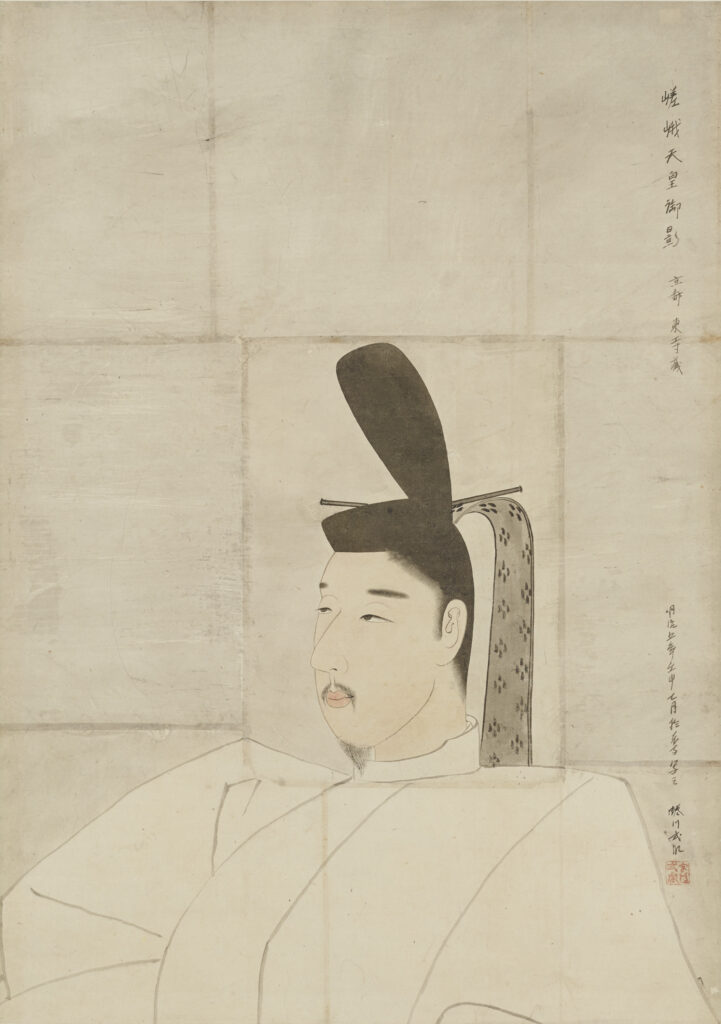
Collection: Tō-ji Temple (Japan).
Source: ColBase (National Institutes for Cultural Heritage).
License: CC BY 4.0.
How Zen Monasteries Stabilized Japanese Tea Practice
Zen monasteries provided disciplined repetition. Monastic life operated through scheduled routines, regulated movement, and shared authority. Consequently, tea could align with existing patterns of practice. Rather than remaining casual consumption, tea entered a cycle of repetition.
Repetition produces stability. When monks prepared and served tea within fixed settings, Japanese tea practice acquired reproducible structure. At the same time, Zen training emphasized attention and embodied action. Therefore, tea became compatible with Zen discipline not only functionally but structurally.
Textual Transmission and Institutional Expansion
Transmission further strengthened institutionalization. Monks traveled between Japan and Song China, carrying both tea knowledge and religious texts. Works such as Kissa Yōjōki described tea’s physical and mental benefits, thereby providing written support for adoption. Because tea could be explained and justified, institutions could incorporate it systematically.
Commercial exchange also played a role. Trade networks transported tea leaves and utensils, connecting monastic and elite environments. As a result, Japanese tea practice expanded across institutional boundaries while retaining structural coherence.

Source: Wikimedia Commons.
License: Public Domain.
From Drinking Tea to Structured Japanese Tea Practice
The decisive shift in Japanese tea practice formation is structural rather than aesthetic. Tea becomes a practice when it gains a stable setting, repeatable form, and shared recognition. Court ritual provided ceremonial framing, Zen monasteries provided disciplined repetition, and texts supplied conceptual support. Together, these elements allowed Japanese tea practice to be learned and transmitted.
Importantly, tea did not merely enter religious space. Instead, it acquired ritual structure, which made it transferable across institutions. By the late medieval period, Japanese tea practice possessed sufficient internal coherence to move beyond strictly monastic environments without losing structural identity.
Bridge to the Zen Reconfiguration
Once Japanese tea practice achieved institutional form, the next transformation concerned meaning within that form. Zen discourse intensified attention and reoriented the relationship between structure and experience. This transition is explored in Ikkyū Sōjun and the Zen Transformation of Tea Practice, where disciplined repetition becomes a template for internal recalibration.
References
- Benn, J. A. (2015). Tea in China: A Religious and Cultural History. University of Hawai‘i Press.
- Kumakura, I. (2018). History of Tea in Japan.
- Nihon Kōki (812), entry referencing Eichū’s offering of tea.
- Eisai. (1211). Kissa Yōjōki.
- ColBase (National Institutes for Cultural Heritage), object record for Emperor Saga portrait.
- Wikimedia Commons, “Myoan-Eisai-Kennin-ji-Portrait.png” (Public Domain).