What Is Meibutsu? The Value System of Named Tea Objects in Japan
In Japanese tea culture, meibutsu does not simply mean a famous object. It refers to a structured system in which certain tea objects were named, ranked, authenticated, and transmitted within elite networks. Once an object received a name, it entered a hierarchy of recognition that connected aesthetic evaluation with political authority.
This article examines the historical formation of the meibutsu system, from Muromachi-period ranking practices to Momoyama transformation and Edo institutional stabilization.

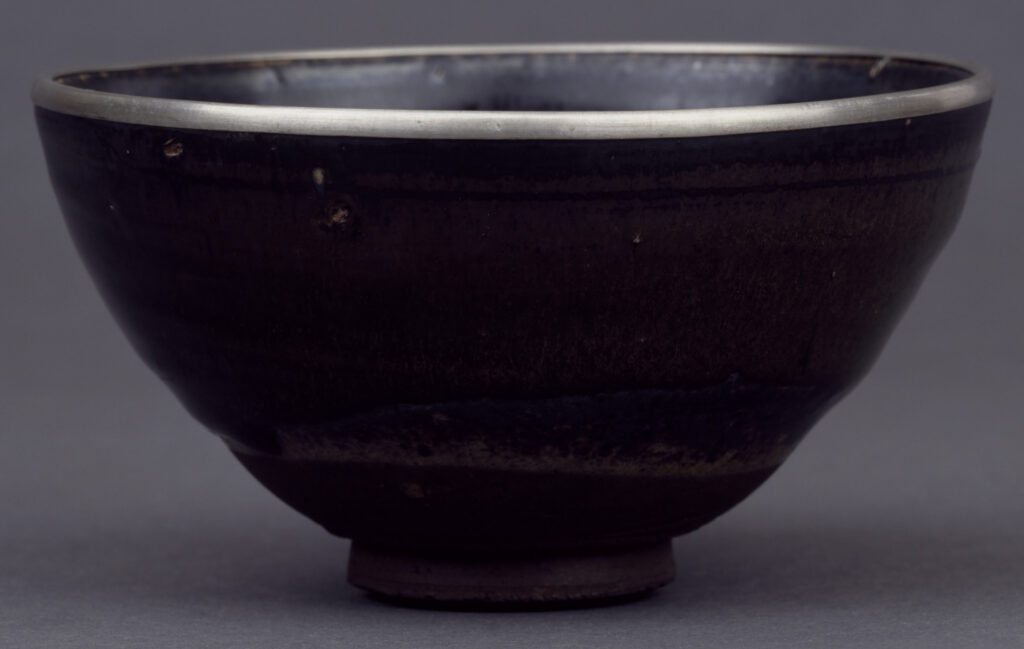
Collection: The Museum of Oriental Ceramics, Osaka.
Source: Wikimedia Commons.
License: CC BY 4.0.
File: Yuteki_Tenmoku_(The_Museum_of_Oriental_Ceramics,Osaka)_11.jpg
1. Muromachi Origins: Karamono and Ranking Authority
The origins of the meibutsu system lie in the Muromachi period’s culture of karamono (Chinese imports). Tea caddies, Tenmoku bowls, and incense vessels from the continent were classified and ranked within the Ashikaga shogunate’s collection. Documentation and provenance became inseparable from aesthetic judgment.
This early ranking practice created a dual structure: aesthetic distinction and institutional validation. Objects were not merely admired; they were catalogued and positioned within formal hierarchies.
Collection: Kyoto National Museum.
Source: ColBase (National Institutes for Cultural Heritage).
Collection ID: G甲542.
License: Free for secondary use with attribution.
2. Naming and Authority: From Object to Recognized Status
The act of naming transformed an object’s status. A tea object with a recorded lineage and a recognized name gained institutional legitimacy. The authority to name or authenticate such objects became concentrated among elite tea practitioners and political leaders.
Meibutsu therefore functioned as a controlled recognition system. It regulated which objects counted as exemplary and which did not. Naming created inclusion; silence produced exclusion.
3. Rikyu and Value Reorientation
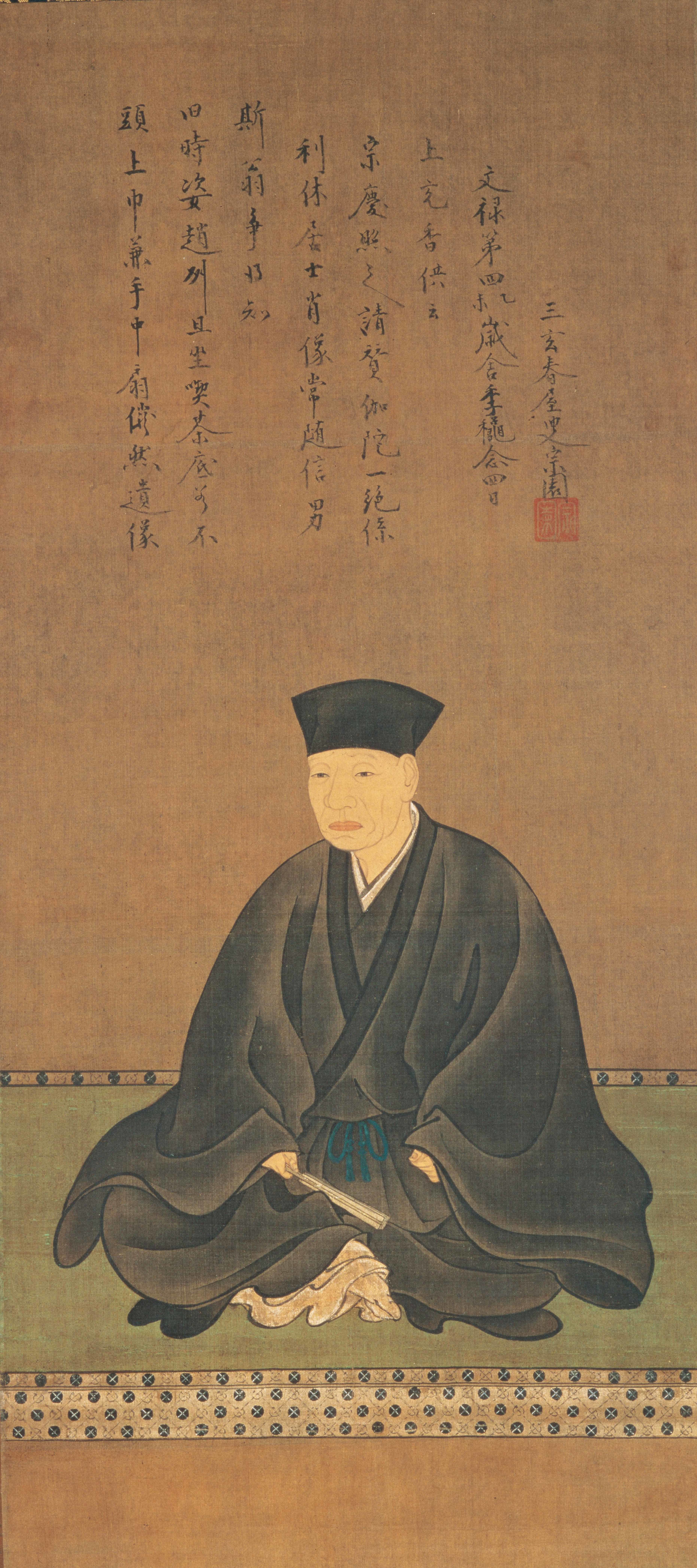
Ink and color on silk, hanging scroll.
Source: Wikimedia Commons.
License: Public Domain.
File: Sen_no_Rikyu_JPN.jpg
Sen no Rikyu did not abolish the meibutsu system; he reoriented its evaluative criteria. While earlier ranking emphasized continental prestige, Rikyu shifted attention toward material presence, proportion, and situational harmony. The authority to recognize value remained structured, but its aesthetic focus moved.
This shift did not dissolve hierarchy. It recalibrated it. Recognition continued to depend on certification and recorded transmission.
4. Political Expansion Under Hideyoshi

Collection: Tokugawa Memorial Foundation (as noted on Commons).
Source: Wikimedia Commons.
License: Public Domain (PD-Japan).
File: Hatsuhana_Katatsuki,_front_view_(color).jpg
Under Toyotomi Hideyoshi, named objects became integrated into broader political consolidation. The system of recognition intersected directly with sovereign power. Ownership, display, and redistribution acquired explicit political meaning.
It is important to distinguish this political deployment from the structural definition of meibutsu itself. The system existed before large-scale consolidation; it was later intensified and strategically mobilized.
5. Edo Institutional Stabilization
In the Edo period, the meibutsu system stabilized through formal documentation, lineage recording, box inscriptions, and catalog production. Classification categories such as ō-meibutsu and chū-meibutsu standardized evaluation.
Custody replaced spectacle. Certification replaced accumulation. The system endured not through dramatic transfer but through administrative continuity.
6. Structural Characteristics of the Meibutsu System
The meibutsu system can be described through five structural elements:
- Naming authority concentrated within recognized lineages.
- Documented provenance linking object and status.
- Hierarchical ranking embedded in institutional memory.
- Political alignment expressed through controlled display.
- Selective invisibility of objects outside recognition networks.
Meibutsu was therefore not simply a matter of fame or beauty. It was a governance structure of value within Japanese tea culture. Through naming, ranking, and documentation, aesthetic distinction became socially regulated and historically durable.
References
- Kumakura, Isao. History of Chanoyu.
- Pitelka, Morgan. Japanese Tea Culture.
- Sen, Sōshitsu. The Japanese Way of Tea.
- Primary tea diaries and catalogues of named objects.