Ikkyu Sōjun is often remembered through colorful anecdotes, yet his deeper significance lies elsewhere.
He sharpened a tension within Zen: the tension between institutional form and direct experience.
That tension later became a reusable resource for cultural practices beyond the monastery, including the disciplined world of tea.
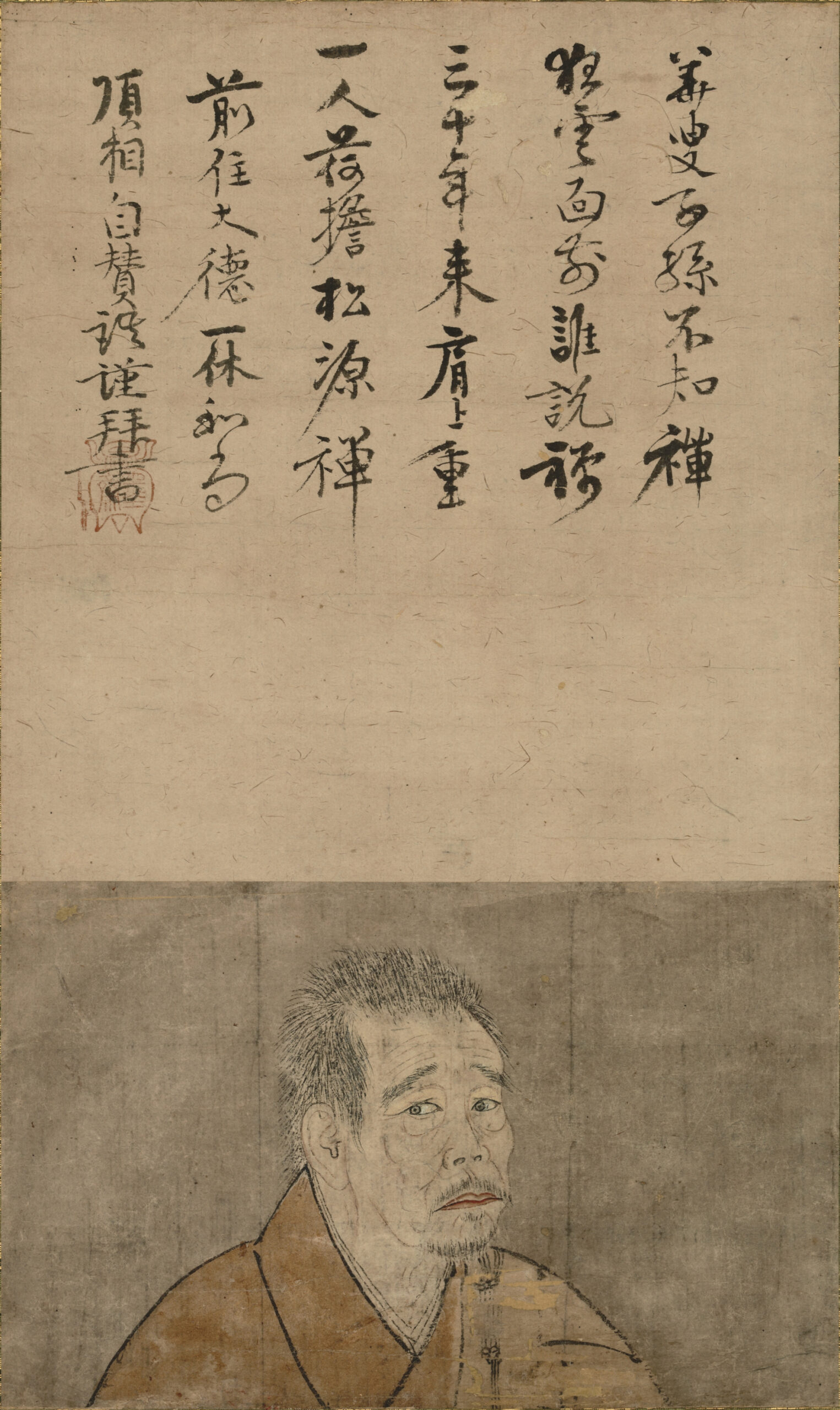
(Muromachi period, 15th century), attributed to Ikkyu Sōjun.
Collection: Tokyo National Museum.
Source: ColBase (National Institutes for Cultural Heritage).
Object ID: B-2944.
ColBase record.
1. The Problem of Form
Every stable institution depends on repetition. Repetition produces authority, and authority produces recognizable form.
Zen monasteries of the Muromachi period were no exception.
Yet stability carries a risk. Form can begin to replace encounter, and language can begin to replace realization.
When this shift occurs, the system protects itself rather than the experience it was meant to guard.
Ikkyu’s importance lies in how sharply he exposed this risk.
He did not merely criticize institutions.
He reasserted the primacy of direct insight, and he did so from within the institutional world.
2. “Outside the Scriptures” Reconsidered
The phrase commonly translated as “a special transmission outside the scriptures, not dependent on words and letters” has often been treated as a slogan.
In structural terms, however, it functions differently.
It places a constraint on explanation and reminds the practitioner that doctrinal clarity is not the same as lived clarity.
This does not abolish language; it reframes its role.
Words may point and stabilize memory, but they must not replace encounter.
3. Institutional Tension as Correction
Cultural systems rarely change through rejection alone.
They change through tension.
When formal stability grows rigid, a corrective pressure may emerge.
Ikkyu can be understood as one such pressure.
His writings and reputation emphasized immediacy, sincerity, and experiential clarity.
This emphasis did not dismantle Zen institutions; instead, it recalibrated the meaning of practice.

(Muromachi period, 15th century).
Collection: Tokyo National Museum.
Source: ColBase (National Institutes for Cultural Heritage).
Object ID: A-10137.
ColBase record.
4. Experience and Restraint
It would be simplistic to describe Ikkyu as anti-form.
Direct experience does not negate structure; it limits its authority.
In this sense, form becomes protective rather than performative.
It creates conditions for attention without claiming to be the goal itself.
This recalibration is crucial.
It transforms rebellion into discipline and converts tension into a method.
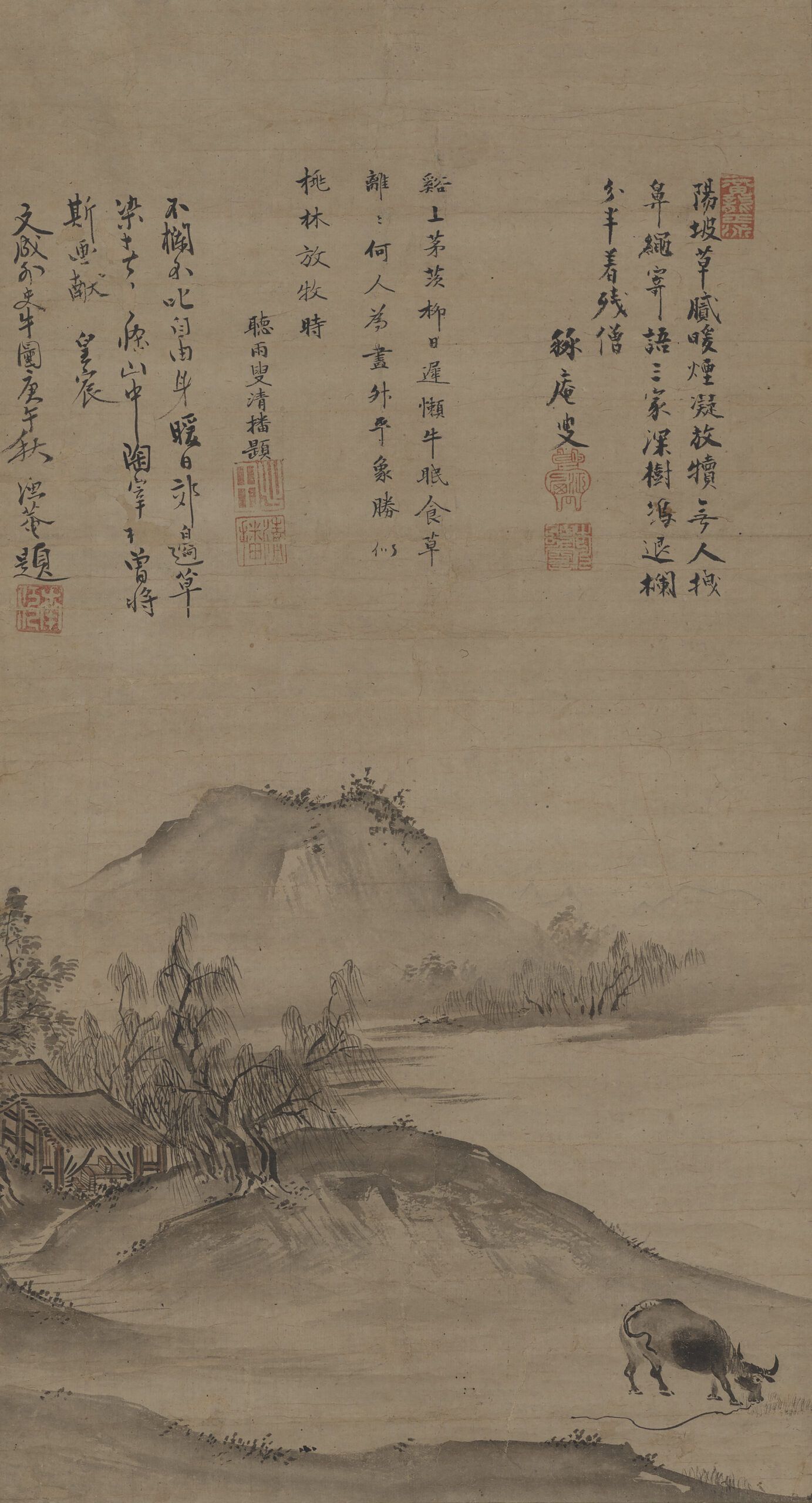
(Muromachi period, 15th century).
Collection: Kyoto National Museum.
Source: ColBase (National Institutes for Cultural Heritage).
Object ID: A甲363.
ColBase record.
5. Why This Matters Beyond Zen
The significance of Ikkyu extends beyond monastic history.
By sharpening the contrast between form and experience, he generated a transferable principle.
Later cultural practices, including tea, would depend heavily on form: gesture, sequence, spatial arrangement.
Yet the strongest versions of tea do not treat these forms as ends in themselves.
They function as frames for attention and protect the moment of encounter.
In this way, a tension articulated within Zen became a stabilizing resource elsewhere.
6. Toward Jukō and the Reconfiguration of Tea
The tension that Ikkyu Sōjun clarified within Zen did not remain confined to the monastery.
It entered the cultural bloodstream of late Muromachi Japan.
When Murata Jukō later reformulated tea practice, he did not simply invent a new aesthetic.
He inherited a sharpened awareness of form and direct experience — an awareness that Ikkyu had made unavoidable.
In this sense, the transformation of tea cannot be understood without first recognizing the recalibration that occurred within Zen.
References
- ColBase (National Institutes for Cultural Heritage, Japan). “Calligraphy in One Line” (B-2944), Tokyo National Museum.
- ColBase (National Institutes for Cultural Heritage, Japan). “The Zen Monk Ikkyu” (A-10137), Tokyo National Museum.
- ColBase (National Institutes for Cultural Heritage, Japan). “Hōgyūzu (Letting an Ox Graze)” (A甲363), Kyoto National Museum.