Meibutsu Hunting: The Reconfiguration of Tea Value Under Sovereign Power
“Meibutsu hunting” refers to the consolidation and controlled redistribution of named tea objects during the late Sengoku and early Edo periods. It was not a marginal practice of luxury. It was a structural mechanism through which authority, rank, and legitimacy were made visible. As political power centralized, prized tea objects moved toward sovereign control, and their ownership acquired formal political meaning.
This essay examines meibutsu hunting as a system of value reconfiguration. It focuses on object capture, managed display, authentication authority, and eventual institutional stabilization. The emphasis is not narrative drama, but structural transformation.

Reproduced from Taishō Meikikan (1937).
Collection: Tokugawa Memorial Foundation (as noted on Commons).
Source: Wikimedia Commons.
License: Public Domain (PD-Japan).
File: Hatsuhana_Katatsuki,_front_view_(color).jpg
1. Object Capture and Centralization
During territorial consolidation, named tea objects were gathered through forced transfer, compelled offering, asymmetric purchase, and post-conflict redistribution. These movements paralleled political restructuring. Land and offices were reassigned; so were cultural assets. Because meibutsu were portable, identifiable, and recordable, they functioned as compact units of elite reward.
Centralization required visibility. A named object displayed in a regulated gathering became proof of proximity to power. The sovereign side controlled both the object and the setting that made the object socially legible. Ownership thus became inseparable from political alignment.
2. Expansion and Managed Visibility

Collection: Kōdai-ji Temple, Kyoto.
Source: Wikimedia Commons.
License: Public Domain.
File: Toyotomi_Hideyoshi_c1598_Kodai-ji_Temple.png
Under Hideyoshi, accumulation intensified and public display expanded. Large gatherings amplified recognition and increased the stakes of naming. The broader the audience, the more critical certification became. Control over which objects counted as meibutsu — and who had authority to define them — narrowed into fewer hands.
Redistribution did not dilute control. When a named object was assigned to a retainer, it functioned as a credential within a supervised hierarchy. The object signaled alignment within sovereign structure, while remaining embedded in a centralized recognition system.
3. Displacement and Memory
Mid-level holders of named objects experienced displacement as authority compressed toward fewer centers. Objects moved; recorded names endured. Political rank shifted more rapidly than object memory. Tea diaries and chronicles preserved ownership chains even when political fortunes reversed.
Later narratives sometimes dramatized moments of refusal or destruction. Whether every detail is historically verifiable is secondary to the structural implication: object transfer had become politically legible. The preservation of such stories indicates the degree to which named objects functioned as markers of alignment within sovereign order.
4. Administrative Stabilization
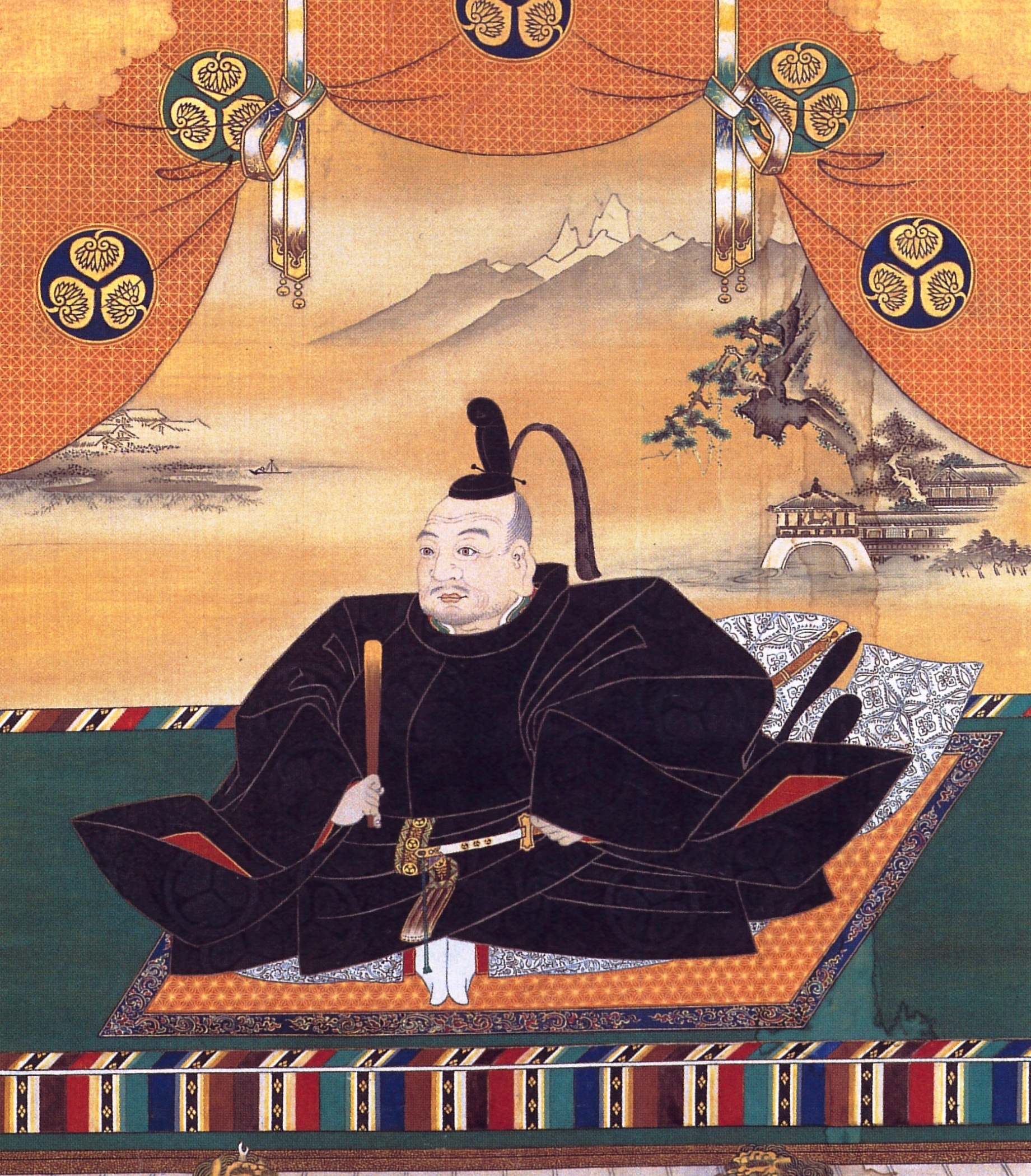
Source: Wikimedia Commons.
License: Public Domain (PD-Japan).
File: Tokugawa_Ieyasu2.JPG

Collection: Honma Museum of Art.
Source: Wikimedia Commons.
License: Public Domain.
File: Letter_from_Tokugawa_Ieyasu_to_Mogami_Yoshiaki_(Honma_Museum_of_Art).jpg
With the establishment of Tokugawa rule, the dynamic circulation of objects gave way to regulated custody. Authority shifted from performative accumulation to administrative stabilization. Named objects were catalogued, stored, and integrated into a governed hierarchy. Documentation became as significant as possession.
The sovereign display of value transformed into bureaucratic order. Custody, certification, and controlled access defined prestige. The system no longer relied on spectacular demonstration; it relied on durable record and institutional continuity.
5. Structural Consequences
Three consequences followed. First, value intensified through proximity to centralized authority. Second, authentication power concentrated into fewer channels. Third, selective invisibility increased as everyday objects fell outside elite recognition systems.
Meibutsu hunting was therefore not merely acquisition. It was a governance technology of value. It reorganized ownership, narrowed interpretive authority, and embedded cultural capital within sovereign structure. The mechanism did not disappear with peace; it stabilized and endured in institutional form.
References
- Varley, P., & Kumakura, I. (1989). Tea in Japan: Essays on the History of Chanoyu. University of Hawai‘i Press.
- Kumakura, Isao. Studies on Momoyama and early Edo tea culture.
- Primary tea diaries and contemporary chronicles (critical editions).
- Wikimedia Commons file pages for images cited above.